
Texas Democrats overcame hefty oil industry spending and interference from Elon Musk to win historic elections on Tuesday night, not just for Senate and governor, but down the ballot. Mourning the GOP’s steep losses, MAGA political commentator Grant Stinchfield bemoaned to Steve Bannon, “What happens to oil and gas in Texas?”
Indeed, Texas is the largest oil and gas producer in the country, so Democrats’ newfound control — of the governor and lieutenant governor seats, the state House, a seat on the state agency responsible for regulating oil and gas, and the Attorney General’s office — has important implications. Oil giants could begin to face new fines for pollution, enforcements of regulations, and limits on their financial influence in the Lone Star State, which has long allowed Big Oil to run roughshod over democracy and the law. On the campaign trail, many of the winning officials focused on pollution and cleanup, affordability, and corruption, especially when it came to Big Tech’s data center expansion plans.
This election will remove some of the fossil fuel industry’s biggest allies in the country from office. But Big Oil’s sway in the state does not disappear even with Democrats making new inroads. The last remaining Republican official in Texas is Ted Cruz, the biggest oil money recipient in the Senate and the sponsor of legislation to give the fossil fuel industry immunity from climate laws and lawsuits.
And Talarico, who touted an “all of the above” energy approach, took thousands in fossil fuel money, though far less than his opponent. Governor-elect Gina Hinojosa said on the campaign trail that “The oil and gas industry is an essential part of who we are as a state.”
Whether officials can tow that line while sticking to their policy promises and keeping the industry in check remains to be seen.
Enforcing pollution rules on oil and gas giants
Texas is famously industry-friendly, and the headquarters of ExxonMobil, Chevron, and SpaceX have fled there to escape more stringent policies elsewhere. The state has become home to some of the most glaring pollution problems in the country, including thousands of abandoned and inactive wells leaking climate-warming methane and contaminating air and water near peoples’ homes. The state also faces a growing problem of toxic oil and gas wastewater, which industry wants to dump in rivers and rangeland in order to keep drilling.
Jon Rosenthal will be the first Democrat in more than three decades to gain a seat on the three-seat Texas Railroad Commission, the state agency that regulates oil and gas. Rosenthal handedly defeated the oil industry favorite, Bo French, by 7 points, after French made racist remarks throughout his campaign.
Over his six-year term, Rosenthal will have a say over drilling permits, pipeline safety, evolving rulemaking for active wells, industry-backed carbon capture and storage plans, and solid oil and gas waste pits — all major issues for the state.
A former oilfield engineer and self-proclaimed “drill, baby, drill Democrat,” Rosenthal has promised to address methane leaks and flaring at gas facilities and enforce stricter requirements on companies for plugging wells. He also pledged to impose a new fee on oil companies injecting hazardous wastewater underground.
“There's not some sacred bond [to oil majors] you can't break. [Fossil fuel communities are] just as pissed off about things that have gone wrong, and they want companies to pay.”
The incoming Attorney General, Democrat Nathan Johnson, has voiced the importance of properly enforcing existing rules on oil and gas companies. Hinojosa, who once proposed a “Texas Climate Plan,” will be responsible for appointing a slate of new commissioners to state regulatory agencies that could do the same.
Texas also flipped its state House and is sending 14 Democrats to the House of Representatives along with a new Senator, which could help boost more oversight of industry pollution and federal regulation.
As for whether Texas voters have an appetite for more regulation, public opinion polling from UC Santa Barbara found a majority of voters living near oil and gas wells want oil companies to pay for plugging old wells and begin planning for a transition away from fossil fuels.
“I think people misperceive what fossil fuel communities actually believe. There's not some sacred bond [to oil majors] you can't break,” said Paasha Mahdavi, a political science professor at UC Santa Barbara studying the oil industry. “They're just as pissed off about things that have gone wrong, and they want companies to pay.”
Limiting oil industry influence over government
Many Texas Democrats campaigned on tackling corruption in government, and they now have the opportunity to make some concrete changes limiting fossil fuel influence in state policies.
Senator-elect James Talarico skewered his opponent, Ken Paxton, for being funded by “billionaire mega-donors”, including oil and gas money backing his race. “We just saw oil and gas interests and Elon Musk try to take away the public’s efforts to elect a Democratic senator,” said Calvin Jillson, a political scientist at Southern Methodist University in Texas. Jillson is hopeful the race will spur a conversation about the state’s unique lack of limits on campaign finance and billionaire influence in Texas politics.
Johnson, the incoming state Attorney General, defeated oil and gas heir Mayes Middleton to take over an office that has been used for decades for overtly politicized lawsuits. Johnson has vowed to fight for consumer protection, “root out political corruption,” and end the office’s role as a political pawn to fight climate action. He replaces Ken Paxton, who has fought federal climate rules and other states’ efforts to make oil companies pay for climate damages.
Johnson will also be responsible for enforcing recusal policies for oil and gas regulators — which “could be a really big deal,” said Virginia Palacios, executive director at the Texas oil and gas watchdog Commission Shift. This would affect the Texas Railroad Commission, whose regulators have often overseen the same companies in which they held stock. Candidates for the Texas Railroad Commission also receive donations from industry — something Rosenthal said he would work to ban.
The election also changes the composition of the nine-member Texas Supreme Court, with Democrats winning all four of the seats up for election. Exxon has asked the state Supreme Court court to intervene in climate lawsuits and used it to target its critics.
The data center and fossil fuel buildout
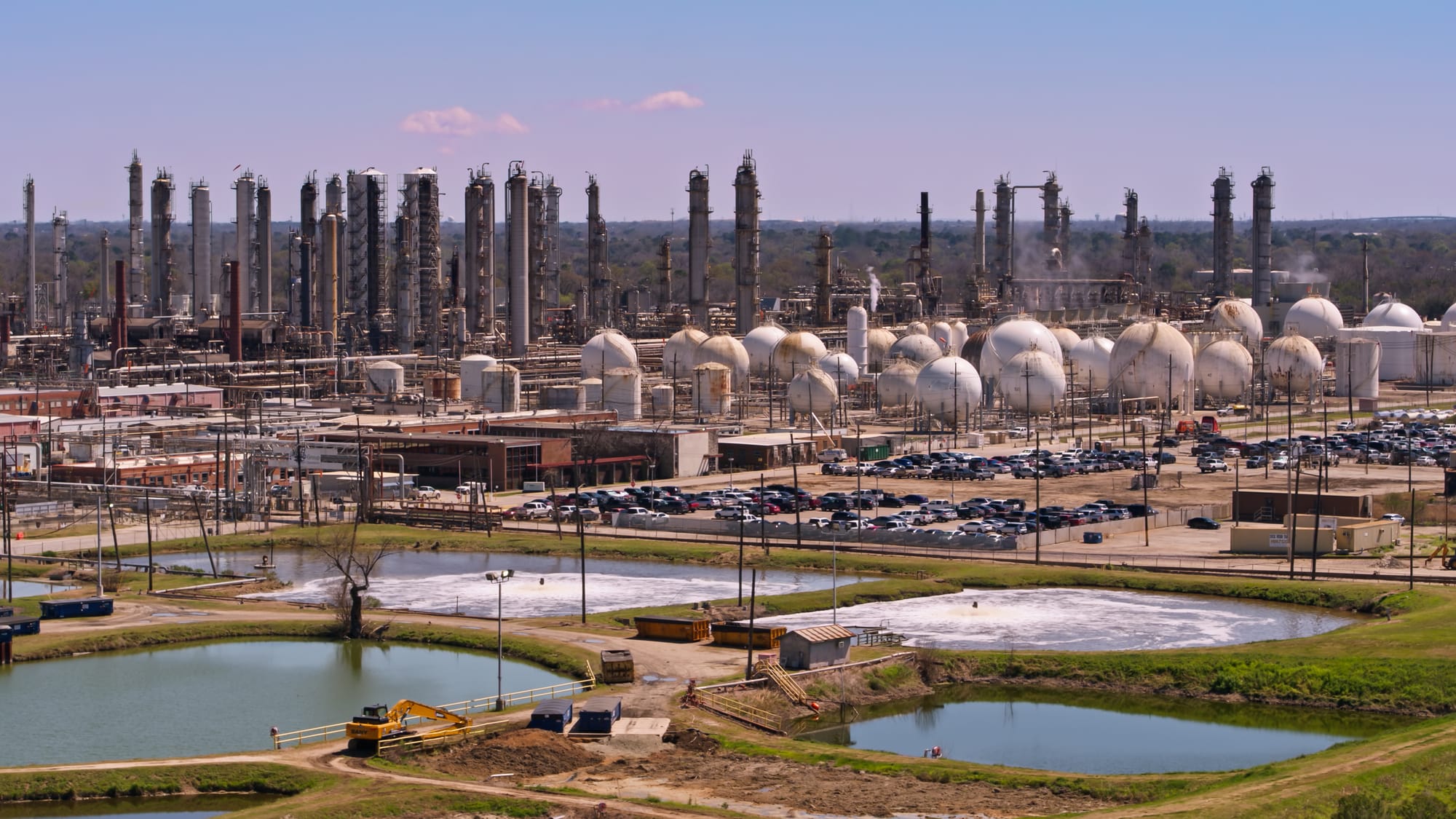
The rapid influx of resource-grabbing data centers drew the ire of Texas voters and helped elect Democrats like Hinojosa, who promised to enact an immediate moratorium on new Texas facilities.
Texas is home to the country’s biggest boom of new, highly polluting gas-fired plants built or proposed to power data centers, which the Trump administration has fast-tracked with little public input. But even in races where data centers were a hot-button issue, most candidates avoided naming the fossil fuel industry as the power and partner behind AI.
That leaves Democrats with “an electoral mandate to address one issue but not the other,” said Geoffrey Henderson, a professor of environmental policy at the University of Michigan.
The stakes can be seen in Project Kilby, a massive Chevron-owned gas-powered plant set to provide power to a Microsoft data center in West Texas. Chevron is seeking a school district tax break worth hundreds of millions of dollars to build the plant, which is expected to use enough gas-fired electricity for the data center to power more than 2 million homes. The company says more such projects could come in the state, and anticipates it will ramp up gas production in the Permian to supply the data center buildout.
Talarico has sent mixed signals about how he would handle the oil industry’s plans to benefit from AI. “I support our oil and gas industry,” he said in an interview with CBS after criticizing “the data center industry” and its impact on the state. Talarico also praised Exxon for “ensuring that our oil and gas industry can continue to grow while capturing these harmful emissions.” Exxon has promised investors, without evidence, that it can build gas-fired plants equipped with carbon capture technology that would eliminate 90 percent of emissions from the data centers they supply.
Talarico campaigned on better preparing the state for climate disasters, bolstering air and water rules, and investing in wind and solar energy alongside oil and gas. He called for stricter rules on data center development, but did not address the type of fuel they would be powered by.
The acceleration of AI powered by fossil fuels would be disastrous for efforts to rein in climate change. The buildout of gas-fired plants to fuel data centers in the U.S. are set to lock in hundreds of millions of tons of additional climate pollution, and data centers are threatening to undo 15 years-worth of nationwide power sector carbon emissions, recent analyses show.
The future for data centers, gas-fired plants, and pipelines in Texas would also be determined in part by the now-uncertain fate of a congressional permitting deal to weaken environmental review and limit public input into such projects — a priority for Big Oil.
Big Oil will adapt. How will Texas respond?
Greater Democratic control doesn’t mean inevitable changes to oversight of the oil industry. Oil companies have dealt with Democratic administrations at the federal level, and have proven adept at convincing policymakers they were dedicated to finding solutions to the climate change and pollution caused by their operations.
Shiv Srivastava, policy director at the Houston-based environmental justice group Fenceline Watch, hopes the new Texas slate will learn from the past and more deeply investigate the industry commitments and “false solutions” that were enabled during the Biden administration.
“Now Texans have the opportunity to have a government that actually is responsive to the needs of ordinary folks, instead of protecting industry.”
Sharon Wilson, a Texan and executive director of oil and gas watchdog Oilfield Witness, thinks the state’s’ climate and pollution problems are far bigger than regulation alone can solve, and that Democrats need to go much further than what they promised on the campaign trail to make a difference. Wilson argues Democrats should stop permitting oil and gas expansion to stop the inevitable releases of methane and other toxic gases. “If the Democrats continue issuing new permits at the same level things will get worse while they are in control,” she said. There were more than 860 new drilling permits issued last year.
Srivastava was more optimistic, though he said politicians would need to be held accountable to their promises. “Now Texans have the opportunity to have a government that actually is responsive to the needs of ordinary folks, instead of protecting industry,” he said. “It's no longer ‘economic development’ versus the well-being of communities like ours.”